Where can I buy futures data?
As a trader or investor, getting futures data is key.
It helps you make smart choices in the financial markets.
Futures data shows you market trends, so you can lead the way.
You can get futures data from many trusted places.
Companies like Lenz + Partner, Infront, Databento, Bloomberg, and Datastream have lots of data.
They meet different needs and likes.
Knowing where to get and use futures data can really help your trading plan.
In this article, we'll look at where you can buy futures data. We'll make sure you find the best one for your goals.
Key Takeaways
- Reliable futures data is essential for traders and investors.
- Multiple sources are available for purchasing futures data.
- Databento, Bloomberg, and Datastream are reputable providers.
- Futures data helps in understanding market trends.
- Choosing the right data source can enhance your trading strategy.
Understanding Futures Data and Its Importance
To understand the futures market, you need to know about futures data.
This data includes past prices, how many trades were made, and how many contracts are open. It's key for traders and investors to make smart choices.
What is Futures Data?
Futures data is about futures contracts. These are deals to buy or sell something later at a set price. The data covers:
- Historical Price Data: Past prices of futures contracts, which help in analyzing trends.
- Trading Volumes: The number of contracts traded, indicating market activity.
- Open Interest: The number of outstanding contracts, showing market participation.
Databento offers data from places like CME and ICE. This gives traders a full view of the market.
To further explore how market data is structured, consider learning about basic components like feeds.
Market data feeds are crucial for real-time analysis and can vary by provider.
For detailed guidance, check out this market data feed guide.
Why You Need Accurate Futures Data
Having the right futures data is important for many reasons:
- Market Analysis: It lets you deeply analyze market trends and patterns.
- Risk Management: Knowing the market helps manage risk better.
- Strategy Development: Good data helps in creating and improving trading plans.
With the right data, traders can make smarter choices. This leads to better trading results.
Top Sources for Purchasing Futures Data
Good futures data is key for trading success. You need reliable and up-to-date data to make smart choices. There are many top places to buy futures data, each with its own perks.
Financial Data Providers
Financial data providers give top-notch market data. TAI-PANoffers data from different trading places. It's a trusted source for futures data and good prices. Infront, Bloomberg and Datastream also have great data solutions for traders.
When evaluating data feeds, it's useful to understand how to select the best options.
Different providers offer varying features, so comparing them helps.
Learn more about choosing market data feeds for informed decisions.
Online Brokerage Platforms
Many online brokerages include futures data in their packages. They give real-time data, which is vital for quick trading decisions. Look at the data quality and analysis tools when picking a platform.
Data Aggregators
Data aggregators gather data from many sources. They give a full market view. They're great for traders needing data from different places. These platforms help spot trends and patterns not seen in one source.
In short, pick a source that fits your futures data needs. Look at data accuracy, how fast it is, and analysis tools.
Real-time data types can differ from historical ones in terms of speed and use.
Understanding these differences aids in selecting the right futures data.
For insights on real-time vs delayed data, explore comparisons.
Evaluating Different Futures Data Vendors
Choosing the right futures data vendor is key for your trading plan. There are many vendors, each with different services and data. It's important to pick one that fits your needs.
Key Features to Look For
When looking at futures data vendors, there are important things to check. These include:
- Data Accuracy and Coverage: Make sure the vendor's data is right and covers the markets you want.
- Data Delivery Methods: See if the data comes in real-time, delayed, or historical. Make sure it fits your trading needs.
- Platform Compatibility: Check if the vendor's data works with your trading platform or software.
- Customer Support: Look at the level of customer support. This includes help documents, customer service, and tech support.
Databento and others offer flexible pricing models. This way, you get value without high costs.
Pricing can vary based on the type of futures data needed.
Discover futures tick data details for specific insights.
Pricing and Package Options
Vendors have different prices and packages. For example:
- Databento starts at $0.50/GB for historical data. They have plans for different users.
- Bloomberg and Datastream have various pricing. It depends on the data type and update frequency.
Think about your budget and how much value the data gives you. Also, see if there are discounts for long-term deals or bundling services.
By looking at these points, you can find a futures data vendor that helps your trading. It will improve your market analysis and strategies.
Financial data providers give top-notch market data that traders and investors rely on for analysis and decision-making. Real-time intraday data platforms are key for reacting quickly to market changes.
TAI-PAN — Affordable for Private Investors
TAI-PAN from Lenz + Partner offers real-time market data and analytics geared especially toward private investors, with low-cost entry options starting around €1 for a trial and affordable monthly feeds from various exchanges. It includes price data for stocks, futures, forex, commodities, and more, making it a cost-effective solution for individuals seeking live market updates without the high costs of institutional systems.
Infront
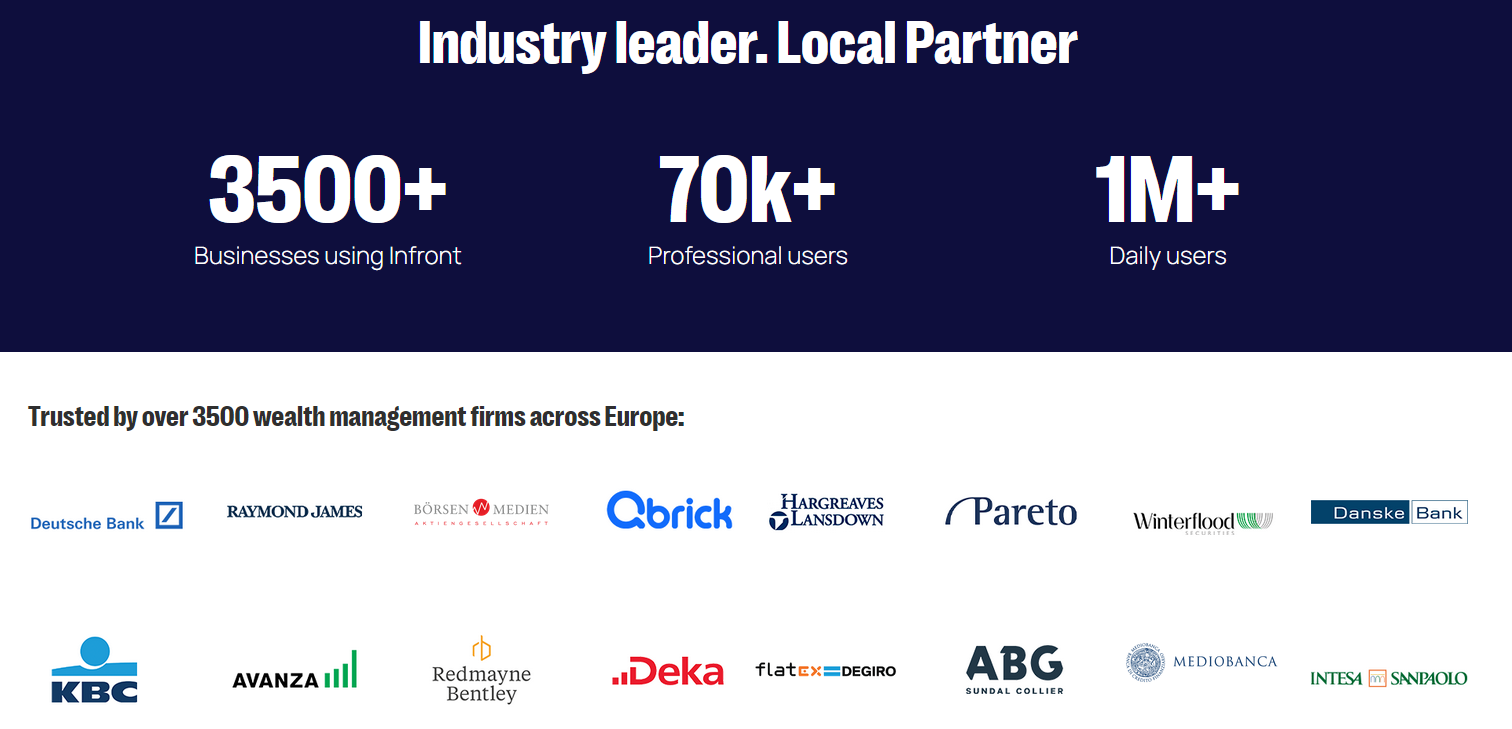
Infront is a major European provider of market data, analytics, and WealthTech solutions for professionals and retail users. Their APIs and data feeds offer real-time and historical market information on equities, derivatives, indices, bonds, FX, and funds, and are designed to be adaptable and cost-effective for a wide range of users. Infront’s tools include charting, customizable feeds, and portfolio analytics suited for both advisors and active investors.
Databento
Databento is a modern financial data platform known for flexible access to institutional-grade market data via APIs and no-code browser interfaces. It delivers both real-time and historical data with usage-based pricing, which means users only pay for what they use — a potentially efficient model for developers, quants, and smaller teams who need high-quality data without long-term contracts. Databento distributes data from many exchanges and continues to expand its coverage and pricing options.
Bloomberg Terminal / Bloomberg Data
The Bloomberg Terminal remains one of the most comprehensive and powerful sources of financial information, offering real-time data, news, analytics, and point-in-time datasets. While expensive compared to most platforms, Bloomberg’s offerings are widely used by institutions for decision-making across asset classes.
Datastream
Datastream (by Refinitiv/LSEG) is another premium data solution providing deep historical and cross-asset market data used widely by analysts and investors. It’s strong in global economic and equity time-series data, delivering rich datasets for research and model building.
Free Alternatives to Buying Futures Data
Buying futures data is helpful, but there are free options too. These are great for those on a tight budget or new to trading. They offer insights into the futures market.
Publicly Available Data Resources
There are many free or low-cost data sources. You can find them on government sites, financial news sites, and online platforms. They offer historical data.
- Government sites like the Commodity Futures Trading Commission (CFTC) have commodity futures data.
- Financial news sites like Bloomberg or Reuters offer free data, but with some limits.
- Online platforms give free futures contracts historical data.
These are good for starting to explore futures data without spending money.
Free resources can be valuable for historical insights into stocks or similar assets.
However, quality varies, so verify the data source.
Explore historical stock data options for more details.
Tools Offered by Brokerage Firms
Brokerage firms give free tools and data to clients. This includes futures data. Even non-clients might get some data, but it varies.
- Real-time Quotes: Some firms give real-time futures contract quotes. This is key for quick financial markets traders.
- Historical Data: Some brokerages offer past futures data for trend analysis.
- Market Analysis: Many firms share market insights to help with trading decisions.
When using these free options, check the data quality and reliability. They're good for starting, but paid services might be more detailed and accurate.
Prioritize your trading goals when selecting data types.
Free intraday data can work for many, but paid may offer more.
Learn about intraday stock data download accessibility.
Tips for Choosing the Right Futures Data for You
There are many futures data providers out there. Picking the right one for you is important. Having the right data at the right time is key to success in futures trading.
First, think about what you need and how much you can spend. Know your trading plan and what data you need to support it.
Identify Your Trading Needs
Before picking a futures data provider, know what you need. Are you a day trader or do you hold positions for longer? Different strategies need different data.
- Day traders need real-time data for quick decisions.
- Long-term investors need historical data for trend analysis.
- Think about the futures contracts you're interested in. Some providers focus on specific markets.
Databento and others offer data tailored to your needs. They have everything from real-time quotes to historical analytics. This way, you can find the data that fits your strategy.
Consider Your Budget
Also, think about your budget. Futures data prices vary a lot. They can be free or cost hundreds or thousands of dollars a month.
- Free resources are good for beginners. They include public data and tools from brokerages.
- Premium services give detailed and timely data. They're important for active traders. Think if the extra data is worth the cost.
- Some providers have different pricing levels. You can start small and upgrade later.
By thinking about your needs and budget, you can find a futures data provider that fits your goals. This way, you avoid spending too much.
Integrating Futures Data into Your Trading Strategy
Using futures data well is key to a good trading plan. It helps you make better choices and might improve your results. Futures data shows market trends and prices, helping you fine-tune your plans.
Using Data for Analysis
Looking at futures data means checking both current and past data. Services like Databento give you lots of data to study. This data helps you understand market trends and prices, making your trading strategies better.
Real-time data lets you act fast on market changes. Historical data gives you a big picture of trends over time. Mixing both kinds of data makes your market analysis stronger.
Real-time Data vs. Historical Data
Knowing the difference between real-time and historical data is important. Real-time data gives you the latest on futures prices and market conditions. This lets you quickly respond to changes. Historical data shows what happened before, helping you see long-term trends.
- Real-time data is key for quick trading decisions.
- Historical data is great for long-term plans.
- Using both gives a full view of the market.
By mixing real-time and historical futures data, you can do better in trading. This helps you stay ahead in the markets.
Common Questions about Buying Futures Data
When you start trading futures, you might wonder about the cost and trustworthiness of futures data. Knowing these things helps you make smart choices in the financial world.
Cost of Futures Data
The price of futures data changes a lot between vendors. For example, Databento has good prices for its futures data services. Look at what different providers charge to find the best deal for you.
Reliability of Free Data Sources
Free data might look good, but it's not always reliable.
You should check if the data is correct and up-to-date.
Futures data, like commodity futures, needs to be very precise for good trading choices.
Think about using paid services for futures data.
They usually give you more detailed and trustworthy data. This is very important in the fast financial markets, where you need the right info fast.
