Who provides historical futures tick data?

Exploring financial markets means you need historical futures tick data to make smart choices.
This data spans over 25 years.
It covers 100 million+ instruments and 500 global exchanges. With 87 trillion+ ticks, you can see market trends clearly.

This information helps you make confident decisions. But, who gives you this historical tick data?
To complement understanding futures data, explore related data types for stocks.
Historical stock data offers similar depth for other asset classes.
Discover more about historical stock data in our dedicated article.
Key Takeaways
- Access to detailed historical futures tick data is key for smart trading.
- The database spans 25+ years, 100 million+ instruments, and 500 global exchanges.
- Such data lets traders analyze market trends with great detail.
- Knowing who provides this data is important for market analysis.
- Using historical tick data helps make confident market moves.
Understanding Historical Futures Tick Data
Tick-by-tick historical data helps you make better trading plans. It shows all the details of past trades and quotes. This info is key for spotting market trends and making smart trades.
Importance of Historical Data
Historical data is super important for traders. It shows how markets have acted before. By looking at past data, you can spot patterns and trends. This helps you make better choices.
Historical data analysis lets you see how markets work. It helps you test your trading plans and guess future market moves.
- Identifying market trends and patterns
- Backtesting trading strategies
- Understanding market volatility
How Tick Data is Used in Trading
Tick data is key for trading. It helps with strategy development and risk management. By studying tick data, traders learn about market liquidity and volatility.
- Analyzing market microstructure
- Developing algorithmic trading strategies
- Enhancing risk management practices
Learning to use historical futures tick data can really boost your trading skills. It helps you make smarter investment choices.
Futures trading demands precise and reliable data sources.
Effective use of tick data can lead to better decision-making.
Explore specific insights on futures tick data for advanced applications.
Major Providers of Historical Futures Tick Data
A few big names lead the market in historical futures tick data.
They have huge archives and the latest tech. These providers offer many services to meet different trader and analyst needs.
Knowing what each can do is key to choosing the right data source.
Market data feeds are foundational to accessing such data.
Understanding different feed types helps in selecting providers.
Learn what is market data feed in our guide.
Infront
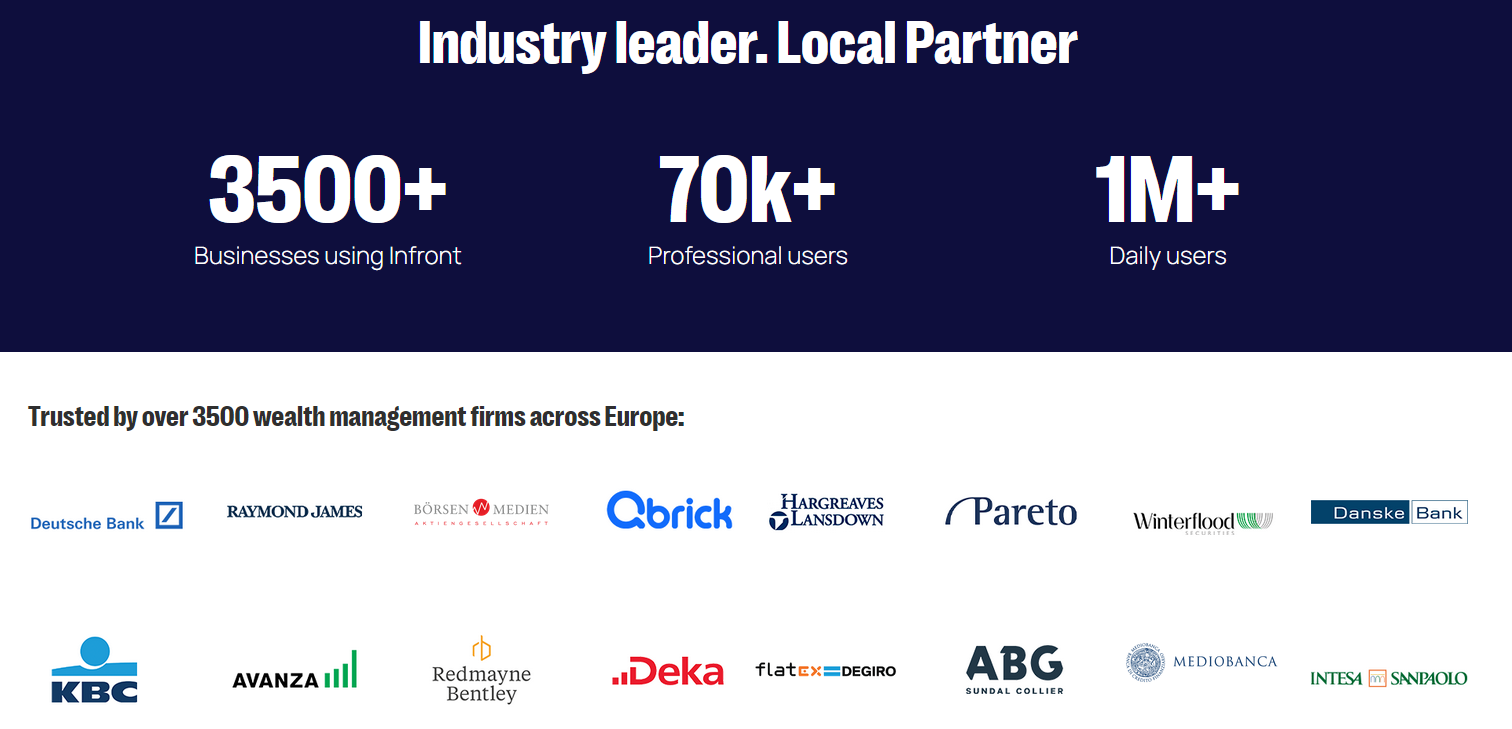
Infront is a leading European financial technology partner with a strong global reach. It provides flexible market data solutions, including extensive historical tick data for futures. Its offering is known for being cost-effective and easy to integrate, making it a strong competitor to traditional heavyweights. Using Infront for historical futures tick data offers several advantages:
- It provides comprehensive global market data coverage, including futures, equities, and indices.
- It offers extensive historical time series and tick-by-tick data availability.
- Users can access data flexibly via the Infront Professional Terminal, Data Manager API, or Excel RTD.
- It features advanced charting and analytics tools for deep market insight
Selecting the best data feed involves evaluating multiple options.
Providers compare based on features and reliability.
Discover tips on how to choose market data feed appropriately.
Bloomberg
Bloomberg is a top name in financial data. Its historical futures tick data is highly valued. It has a vast network and collects data in advanced ways. Experts say Bloomberg's data is among the best, covering many assets and markets.
"Bloomberg's historical data capabilities are unmatched, giving users deep insights into market trends."
Using Bloomberg for historical futures tick data has many benefits:
- It covers global markets well.
- It captures data quickly for detailed analysis.
- It has advanced tools for data analysis and visualization.
Thomson Reuters
Thomson Reuters is a big name in financial data. It offers a wide range of historical data products. Its LSEG Tick History – PCAP is special, with a huge cloud-based data repository. This data is very accurate and reliable.
Thomson Reuters' historical futures tick data has key features:
- It covers many global exchanges and markets.
- It captures data with little delay.
- It offers flexible data delivery, including cloud options.
CQG
CQG is known for its financial data and analytics. It offers historical data products for traders and analysts. Its futures tick data is accurate and reliable, helping users understand market trends.
Using CQG for historical futures tick data has benefits:
- It has high-quality data with few errors.
- It covers futures markets well.
- It has advanced tools for data analysis and visualization.
Niche Providers Worth Considering
Niche providers are making their mark in the historical futures tick data market. They offer unique services that meet specific needs. This data might not be easy to find with bigger providers.
When looking for historical futures tick data, think about what niche providers offer. They might have what you need.
Data latency impacts how timely information reaches traders.
Minimizing latency is crucial for effective trading.
Understand market data latency in detail.
TAI-PAN (Lenz + Partner)
TAI-PAN, provided by the German company Lenz + Partner, is a specialized data feed tailored specifically for private investors and active traders. It is widely recognized for offering high-quality, unfiltered push data at a price point accessible to retail traders. TAI-PAN is designed to integrate seamlessly with popular third-party charting and trading platforms. Using TAI-PAN for historical futures tick data offers key benefits for private investors:
- Retail-Focused Integration: It connects easily with popular platforms like NinjaTrader, AgenaTrader, ATAS, and MetaStock, allowing private traders to use professional-grade data in their preferred software.
- Flexible History: It offers specific packages for historical data, including a "Tick Data" option that provides granule tick-by-tick history (often up to 3 years or more) specifically for backtesting.
- Cost-Efficiency: Unlike many institutional providers, TAI-PAN operates on a transparent, modular subscription model (e.g., separate fees for real-time exchange access vs. historical data packages), making it highly affordable for individuals.
- Global Coverage: It covers major global futures exchanges (EUREX, CME Group, etc.) with reliable, low-latency delivery.
Understanding different data types prevents confusion.
Real-time data differs significantly from historical sources.
Compare real-time historical data differences.

Tick Data LLC
Tick Data LLC is a key niche provider. They give detailed tick-by-tick historical data. This data helps users test and improve their trading plans.
They focus on keeping their data accurate and reliable. This makes them a trusted source for traders needing detailed data.
QuantQuote
QuantQuote is another standout niche provider. They offer a wide range of historical data. This data is essential for testing trading strategies and market research.
Their data is known for being top-notch. This makes QuantQuote a go-to for traders and researchers needing precise data.
AlgoSeek
AlgoSeek is known for its quality historical futures tick data. They use special servers and a unique system to collect data. This ensures they cover everything.
Big firms with over $100 billion in assets use AlgoSeek. This shows how reliable and important their data is. AlgoSeek also offers custom data options and daily updates before the market opens.
When picking a niche provider, think about what you need. Look at data accuracy, customization, and support for backtesting and research. Choosing the right provider can help you succeed.
Accessing Historical Futures Tick Data
Getting historical futures tick data can really help your trading. It lets you make better choices and understand the market better. This can make you a better trader.
Directly from Exchanges
One way to get this data is from the exchanges themselves. Some exchanges give it away for free, while others charge. For example, the Chicago Mercantile Exchange (CME) has data on their website. This data is great for those who want to study specific markets.
But getting data from exchanges can be hard. You might have to deal with complicated websites or data formats. Yet, it's a good place to start, if you need data from a certain exchange.
Subscription Services
Another way is through subscription services. Companies like Bloomberg, Thomson Reuters, and CQG have lots of data. They also offer tools to help you understand the data better.
These services are great for serious traders who need reliable data. They also offer real-time data, which is key for quick trading decisions. But, they can be expensive, so think about if they're worth it.
Free Resources and Trials
If you're on a tight budget or new to trading, there are free options. Some places offer free samples or trials. For example, Tick Data LLC and QuantQuote have free trials.
Also, online forums and platforms sometimes share data. But, always check if the data is right and reliable. Tools like Tick History Workbench help you focus on your trading strategies.
Choosing how to get historical futures tick data depends on what you need. Look at your options and decide what's best for your trading goals.
Evaluating Data Quality and Accuracy
Checking the quality of historical futures tick data is key for trading. It's about making sure the data is right, complete, and trustworthy. This helps traders make smart choices.
Importance of Data Integrity
Data integrity is vital for a good trading plan. High-quality data makes sure backtesting works well. It helps traders make choices based on real facts.
"The quality of your data directly affects the quality of your trading decisions."
Getting tick data from trusted sources is important. Look for providers that give raw exchange data (PCAP). It's the best for detailed and accurate data.
Common Challenges with Tick Data
Tick data has its own problems. Some common ones are:
- Incomplete data sets
- Data errors or inconsistencies
- Lack of standardization across different data providers
Dealing with these issues needs a good grasp of the data. Using data from various sources can spot and fix problems. Also, using strong data cleaning and checking is key for accurate data.
By focusing on data quality, traders can improve their plans. This reduces risks and boosts profits. As trading changes, the need for good tick data will grow.
Costs Associated with Historical Futures Tick Data
It's important to know how much historical futures tick data costs. This cost can affect your budget for trading or research. Choosing the right data provider is key.
Free vs. Paid Data
You can pick between free and paid data for historical futures tick data. Free data might be tempting, but it often has limits like delayed updates. Paid data usually offers more and is up-to-date. For example, AlgoSeek has different plans to fit your needs.
Free data might work for casual or learning uses. But, serious traders and researchers need the detailed and timely info paid services provide. Think about if the extra info is worth the cost.
Factors Affecting Pricing
Several things can change how much historical futures tick data costs. These include:
- The scope of the data (e.g., specific exchanges, asset classes, or time periods)
- The frequency and detail of the data (e.g., tick data vs. minute bars)
- The data provider's reputation and data quality
- Any extra services or tools with the data
Knowing these factors helps you choose the right data provider. For example, detailed tick data for a specific exchange might cost more.
Budgeting for Data Services
To budget for historical futures tick data, first figure out what you need. Think about the analysis you'll do, how often you need updates, and who will use the data. Then, compare what different providers offer to find the best deal.
Also, think about the return on investment (ROI) of the data. While good data can be pricey, it can also give you valuable insights. By looking at costs and benefits, you can choose wisely within your budget and goals.
Making the Most of Your Historical Futures Tick Data
You've got historical futures tick data now. It's time to use it well. With the right tools and strategies, you can learn a lot about market trends. This can help you trade better.
Analytical Tools for Tick Data
Tools like Tick History Workbench are great for analyzing. They let you look closely at market details, trading plans, or how well trades are done. These tools help you use your data to test and improve your trading.
Backtesting with Historical Data
Backtesting is key to checking if your trading plans work. Using futures tick data archives, you can try out your strategies on past data. This helps you see if they're good and make changes if needed.
Staying Ahead with Continuous Learning
Success in trading comes from always learning and changing. Keep up with new trends and insights from tick data providers. Be ready to change your strategies as the market changes.
By following these tips, you can get the most out of your historical futures tick data. This will help you stay ahead in the competitive trading world.